🔑 Key Takeaways for Colorado
Find Your State Savings
Use our free calculator to discover incentives in your ZIP code
Property Tax Exemption
Solar adds value to your home but NOT your property taxes for 20 years.
300+ Sun Days / Year
More than Miami and San Diego — Colorado is a solar powerhouse.
Altitude Bonus
Panels produce MORE power at Colorado's high elevation.
Why State Incentives Matter Now
With the 30% federal residential solar tax credit no longer available as of January 2026, your state and local incentives are now the biggest factor in your solar savings. Some states offer tax credits, others have rebate programs, SRECs, or net metering that pays you back every month. The difference between states can mean thousands of dollars — and that is exactly what Solar Incentive Finder helps you uncover. Enter your ZIP code to see what is available in your area →
The credit lets you deduct 30%. It is a tax credit — that means dollar-for-dollar savings, not just a deduction.
If your system costs $25,000, you get $7,500 off your federal tax bill. The credit runs through 2032, so you still have time to claim it.
The credit applies to all parts of the installation cost: panels, labor, permits, inverters, mounting equipment, and even battery storage if you add one.
The Federal Credit Has Ended — Here Is What Matters
How it works: Install your system in 2026, then claim the credit on your 2026 tax return (filed in 2027). The credit covers the full installed cost — panels, labor, permits, batteries, and inverters.
- ❌ Federal credit ended Dec 2025 — but state incentives below are still active.
REAP — Rural Energy for Agricultural Properties
If you own a farm or ranch in Colorado, you may qualify for the Rural Energy for America Program (REAP). This is a federal program run by the USDA that provides grants and loan guarantees for renewable energy systems in rural areas.
Here is what REAP can do for you:
REAP Grants & Loan Guarantees
REAP provides grants covering up to 50% of project costs and guaranteed loan financing for agricultural producers installing renewable energy systems like solar panels.
- ✅ Up to 50% grant coverage
- ✅ Federal loan guarantees available
- ✅ For farms, ranches, and ag businesses
- ✅ Stacks with the 30% ITC
- ✅ Solar, wind, and energy efficiency upgrades
Grant amounts vary by year based on USDA funding availability.
Plus stacks with State Rebates
The important thing to know: REAP grants can stack with the 30% tax credit. This means a farm owner could potentially cover 65% of their solar cost between REAP and the ITC. That is a massive savings.
Colorado Utility Programs: Xcel Energy, Black Hills & CSU
Colorado has several major utility companies, and each one has its own solar programs. The biggest is Xcel Energy, which serves most of the Front Range. Other major providers include Black Hills Energy (southern Colorado) and Colorado Springs Utilities.
Xcel Energy Solar*Rewards Program
Xcel Energy is the largest utility in Colorado. It serves the Denver metro area, Boulder, Fort Collins, and much of the Front Range. Xcel has one of the best solar programs of any US utility.
The Solar*Rewards program is a performance-based incentive. Here is how it works:
- 📌 You get paid extra money per kWh your system produces, based on your system size and tier level.
- 📌 These payments come on top of your normal solar savings from net metering.
- 📌 The program has limited capacity, so first-come, first-served rules apply.
- 📌 Xcel also offers net metering at retail rate, so exported power is credited dollar-for-dollar.
Xcel also runs the Solar*Rewards Community program, which allows renters and people who cannot install rooftop solar to sign up for shared solar gardens and still save on their electric bills.
Black Hills Energy Solar Programs
Black Hills Energy serves much of southeastern Colorado, including Pueblo, Cañon City, and surrounding communities. Like Xcel, it is an investor-owned utility and is subject to Colorado's net metering law.
- 📌 Black Hills offers net metering at retail rate by state law, meaning you get full credit for any extra power you export.
- 📌 The utility also has a buyback rate program for customers who produce significantly more solar than they use.
- 📌 Check with Black Hills about any rebates or time-of-use rate plans that could help you maximize solar savings.
If you live in the Pueblo or southeastern Colorado area, contact Black Hills Energy before installing to understand their current solar policies.
Colorado Springs Utilities Solar Program
Colorado Springs Utilities (CSU) is a municipal utility — it is owned by the city, not a private company. This means it sets its own solar rules outside Colorado's net metering law. The good news: CSU still supports solar.
- 📌 CSU offers net metering credit for excess solar production, though the exact rate can differ from the investor-owned utility model.
- 📌 CSU has a solar rebate program that provides upfront cash incentives per watt installed (when funding is available).
- 📌 They offer special rate plans for solar customers that can help you maximize savings.
- 📌 CSU also supports community solar projects for renters and homes without suitable roofs.
High-Altitude Solar Performance — A Colorado Bonus
Here is something most people do not realize: solar panels produce more electricity at high altitude. Colorado's elevation gives panels a natural boost that flat states do not get.
Why? At higher elevations, there is less atmosphere between the sun and your panels. That means less sunlight gets absorbed or scattered before it reaches your roof. The result is more power per panel.
For every 1,000 feet above sea level, solar panels typically produce about 1% more electricity. Denver sits at 5,280 feet (one mile high). That alone gives panels roughly a 5% boost over panels at sea level — before you even count Colorado's 300+ sunny days.
🏔️ The Colorado Altitude Advantage
5,280 ft
Denver Elevation
+5%
Extra Panel Efficiency
300+
Sunny Days Per Year
Colorado's high altitude means panels produce more power per watt of installed capacity than almost any other state. Fewer panels can produce the same energy as more panels at sea level.
This altitude boost also means cold winter days in Colorado can be great for solar production. Solar panels actually work more efficiently in cold weather. Combined with Colorado's bright winter sun, your panels will deliver strong output even in January.
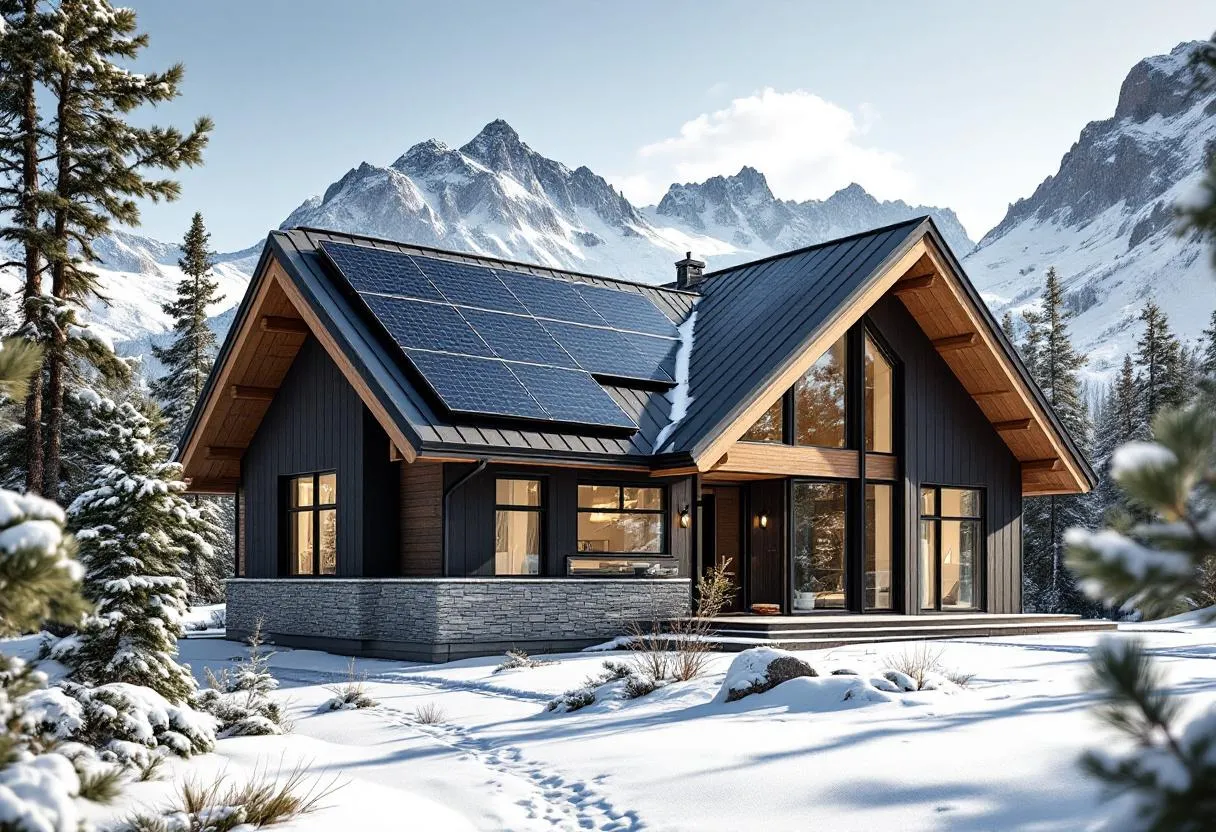
Note: Snow can temporarily block panels, but most roof-mounted panels are angled so snow slides off naturally. Dark panel surfaces also absorb heat and speed up melting.
Colorado Solar Cost & Payback Breakdown
Most Colorado homes need an 8 kW to 12 kW system to cover their annual electricity use.
| System Size | Before Incentives | After 30% Credit |
|---|---|---|
| 6 kW | $18,000 – $21,000 | $12,600 – $14,700 |
| 8 kW | $24,000 – $28,000 | $16,800 – $19,600 |
| 10 kW | $30,000 – $35,000 | $21,000 – $24,500 |
| 12 kW | $36,000 – $42,000 | $25,200 – $29,400 |
These are average ranges. Your actual cost depends on roof type, equipment, local sales tax rules, and installer. Get a custom quote for your home →
Payback Period in Colorado
Most Colorado homeowners see a payback period of 8 to 12 years on their solar investment. After that, it is basically free electricity for the rest of the system's life (25-30 years).
Factors that affect your payback speed:
- Your utility: Xcel Energy customers with Solar*Rewards may pay back faster due to extra per-KWh payments.
- System size: Larger systems cost more up front but produce more savings.
- Electricity usage: Homes that use more power save more by offsetting expensive grid electricity.
- Sales tax exemptions: Some cities save you hundreds more on the total install cost.
- Property tax exemption: Your home value goes up without your taxes going up.
Bottom Line:
Colorado is one of the best states to go solar. Between 300+ sunny days, high altitude panel performance, retail-rate net metering, a 20-year property tax exemption, and the 30% credit — the financial case is strong.
Action Step: Check your exact utility's current solar incentives and rates before signing with an installer. Programs and funding can change.
Frequently Asked Questions
Does Colorado have a state solar tax credit?
Colorado does not currently offer a state income tax credit for residential solar. However, the combination of the 30% tax credit, property tax exemption, sales tax exemptions, and utility incentives like Xcel Solar*Rewards more than make up for it. Colorado remains a financially strong state for solar.
How much is the Xcel Energy Solar*Rewards incentive?
The Solar*Rewards program pays homeowners a rate per kWh produced over a set period, plus you still get full retail net metering. The exact incentive amount depends on your system tier and available program capacity. Space is limited and first-come, first-served, so apply through Xcel Energy as soon as possible.
Do solar panels really produce more power in Colorado?
Yes. Colorado's high altitude (5,000+ feet on average) means there is less atmosphere to filter the sun's rays. Panels at Denver's elevation produce roughly 5% more electricity than identical panels at sea level. Combined with 300+ sunny days, this gives Colorado a significant solar advantage.
Will solar panels increase my property taxes in Colorado?
No. Colorado offers a 100% property tax exemption for solar energy systems for 20 years. The value of your solar installation is excluded from your property tax assessment. Your home value goes up but your property tax bill does not.
How long does it take to recoup the cost of solar in Colorado?
The average Colorado homeowner sees a payback period of 8 to 12 years. After that, the electricity your panels produce is essentially free for the rest of the system's 25-30 year lifespan. Xcel Energy Solar*Rewards customers may see even faster payback thanks to additional per-KWh incentive payments.