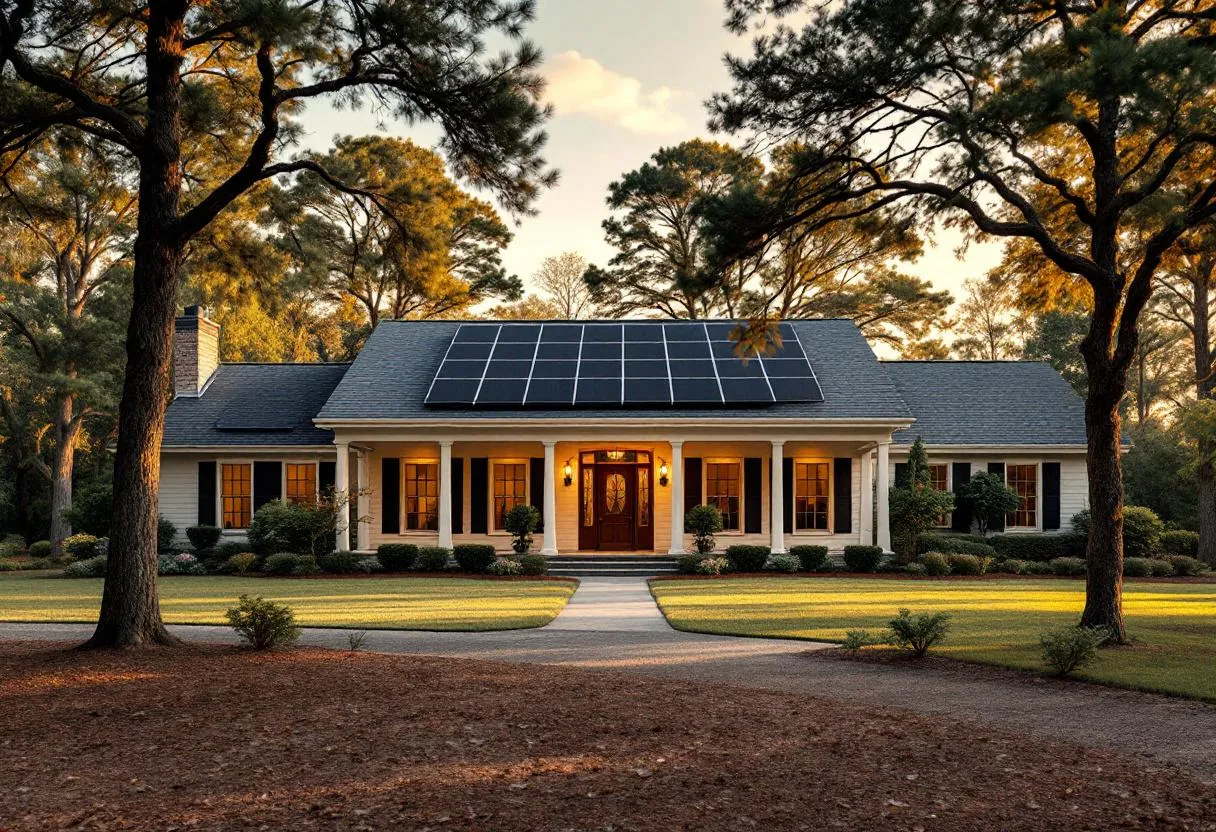
Why Maryland Is a Great Solar State
Here is the thing about Maryland that most people overlook: electricity here is expensive. The state averages around 17 to 19 cents per kilowatt-hour, well above the national average. That makes every solar watt you produce worth more than in most states.
Pair those high rates with a solid stack of incentives — a state tax credit, SRECs, full retail net metering, and property and sales tax exemptions — and solar becomes one of the best financial decisions a Maryland homeowner can make.
Maryland gets about 4.2 to 4.5 peak sun hours per day on average. That is comparable to Massachusetts and better than many people expect for a Mid-Atlantic state. The summer months are especially productive.
Let us walk through every MD solar incentive you can claim in 2026.
🔑 Key Takeaways for Maryland
Find Your State Savings
Use our free calculator to discover incentives in your ZIP code
State Tax Credit (Up to $1,000)
Maryland gives 15% of installed cost back, capped at $1,000.
SREC Income
Sell Solar Renewable Energy Credits for ongoing income from solar production.
7–9 Year Payback
High electricity rates + strong incentives = fast return on investment.
Why State Incentives Matter Now
With the 30% federal residential solar tax credit no longer available as of January 2026, your state and local incentives are now the biggest factor in your solar savings. Some states offer tax credits, others have rebate programs, SRECs, or net metering that pays you back every month. The difference between states can mean thousands of dollars — and that is exactly what Solar Incentive Finder helps you uncover. Enter your ZIP code to see what is available in your area →
The credit gives you a 30% for the full cost of your solar system. It is not a deduction that only lowers your taxable income. It is a direct credit against what you owe. Every dollar of the credit drops your tax bill by a dollar.
While the federal credit is gone, state incentives can still save you thousands. Use our calculator to see exactly what applies to your ZIP code.
The Federal Credit Has Ended — Here Is What Matters
The 30% federal residential credit (Section 25D) ended December 31, 2025. Homeowners who purchase solar in 2026 cannot claim this credit. However, lease and PPA customers can still benefit from commercial credits passed through by their solar provider. Your state incentives are now the primary path to savings.
- ❌ Federal credit ended Dec 2025 — but state incentives below are still active, Maryland gives you a state-level income tax credit for installing solar. This is a resident income tax credit of 15% of the installed cost of your solar system, capped at $1,000 per single installation.
Here is what that means in practice:
Maryland ExclusiveMD State Solar Tax Credit at a Glance
Scenario Amount System cost: $20,000 15% = $3,000 → Capped at $1,000 System cost: $30,000 15% = $4,500 → Capped at $1,000 Maximum credit $1,000 Because the cap is $1,000, virtually every standard residential system gets the full $1,000 credit. To get all of the $1,000, your system must cost at least about $6,667.
You claim this credit on your Maryland state income tax return for the tax year when the system was placed in service. If the credit is larger than your state tax owed, the excess can carry over to future tax years.
Stack it: The $1,000 MD state credit is in addition to the 30% ITC. On a $28,000 system, you get $8,400 from the feds and $1,000 from Maryland — that is $9,400 in tax credits from the two programs combined.
SREC Program — Get Paid for Every kWh Your Solar Panels Produce
The SREC (Solar Renewable Energy Credit) program is one of Maryland's most valuable solar incentives. Here is how it works in simple terms:
Every 1,000 kilowatt-hours (1 MWh) of solar electricity your system generates earns you one SREC. Each SREC is a tradable credit that utilities buy to meet state renewable energy requirements. You can sell your SRECs on the open market.
MD ExclusiveSREC Income Example for Maryland
Detail Amount System size 8 kW Annual production (estimated) ~10,000 kWh/year SRECs earned per year ~10 Estimated SREC price (range) $10 – $80+ per SREC Estimated annual SREC income $100 – $800+/year SREC prices fluctuate based on supply and demand in Maryland's market. Prices have varied significantly over the years. You can sell SRECs directly or use a broker/aggregator for simplicity.
An average 8 kW system in Maryland typically generates about 10,000 kWh per year, which equals roughly 10 SRECs per year. At even moderate prices, that is a real source of income every year your system runs.
💡 Pro tip on SRECs:
SREC prices in Maryland change based on supply and demand. When MD increases its solar requirements for utilities, prices tend to go up. You can sell SRECs individually or sign with an aggregator who handles the paperwork for a small fee.
Net Metering in Maryland
Maryland has one of the strongest net metering policies in the country. Residential systems up to 2 MW qualify for full retail rate net metering. That means every kWh you send to the grid earns you a credit at the exact same rate you pay to buy power.
1:1Full Retail Credit Per kWh ExportedUp to 2 MWMax System Size Eligible for Net MeteringHere is how it works step by step:
- Your panels make electricity during the day.
- If you produce more than you use, the extra flows to the grid.
- Your utility credits your account at the full retail rate — the same price per kWh that you pay.
- At night when your panels are not producing, those credits reduce or zero out your bill.
- Unused credits roll over month to month.
The catch: any credits that remain at the end of the year are paid at the avoided-cost rate, which is lower than retail. So it is best to size your system so you nearly use all your credits within the 12-month period.
MD PolicyMaryland Net Metering at a Glance
- ✅ Full retail credit (1:1) for every kWh sent to the grid.
- ✅ Credits roll over month to month at full value.
- ✅ Available from all major MD utilities: BGE, Pepco, Potomac Edison, Delmarva Power, and SMECO.
- ✅ Applies to systems up to 2 MW — far more than any home needs.
- ⚠️ End-of-year credits settle at the avoided-cost rate (lower than retail). Size your system so credits are mostly used within the year.
Property Tax Exemption for Solar
Maryland has a 100% property tax exemption for residential solar installations. This means the increase in your home's value from adding solar panels cannot increase your property taxes.
Solar panels boost your home value — typically by about 4% to 6%. In most places, a more valuable home means a higher property tax bill. In Maryland, your local government cannot count the value of your solar panels when calculating your property tax. You get the full benefit of a higher-value home without the extra tax bill.
Maryland Law100% Property Tax Exemption for Solar
Under Maryland state law, any increase in property value from a solar or renewable energy system is fully exempt from local property tax assessment. This applies to all cities and counties across Maryland.
The exemption lasts for as long as the solar system is installed. No application is typically required — assessments are done automatically at the state level.
100% Solar Value Exempt from TaxWhile the system is installed
Sales Tax Exemption on Solar Equipment
Maryland charges a 6% sales tax on most purchases. But residential solar energy equipment is exempt from this tax. That includes:
- ✅ Solar panels — the photovoltaic modules themselves
- ✅ Inverters — the devices that convert DC to AC power
- ✅ Mounting hardware — racking, rails, and clips
- ✅ Battery storage — home battery systems
- ✅ Wiring and monitoring equipment
For a $28,000 system, the sales tax exemption saves you about $1,680 instantly. This is automatic — your installer should already know not to charge Maryland sales tax on solar equipment.
MD Sales Tax6% Sales Tax Exemption for Solar
All residential solar energy systems and components are exempt from the Maryland 6% sales tax. This applies automatically to all qualifying solar installations across the state.
💡 Savings example: On a $26,000 system, the sales tax exemption saves about $1,560. No application needed.Pepco & Maryland Energy Administration Programs
Maryland Energy AdministrationMaryland Energy Administration (MEA)
The MEA is the state agency responsible for energy policy and programs in Maryland. Here is what they offer for solar homeowners:
- 📌 MEB Grant Program: The Maryland Energy Benefits program has offered grants and rebates for low-income households installing solar or making energy efficiency upgrades. Funding availability changes — check the MEA website for current open programs.
- 📌 Weatherization assistance: The MEA coordinates with local utilities to offer free home energy audits and weatherization improvements. Better energy efficiency means a smaller — and cheaper — solar system.
- 📌 Community solar: Maryland has an active community solar program for residents who cannot install panels on their own roof. Subscribers can receive credits on their utility bill from a shared solar project.
💡 Tip: MEA programs are subject to funding and budget cycles. Always check energy.maryland.gov for the latest available grants and rebates.Pepco CustomersPepco Solar & Energy Programs
Pepco serves a large portion of central Maryland, including the DC suburbs of Montgomery County and Prince George's County. Electricity rates in this area are among the highest in the state — which makes solar savings especially valuable here.
- 📌 Net metering: Full retail rate credits for solar production sent back to the grid.
- 📌 Home Energy Reports: Pepco provides detailed energy usage reports to help you track consumption and identify savings opportunities.
- 📌 Smart Meter program: Pepco's advanced metering infrastructure lets you monitor real-time usage and helps maximize the value of net metering credits.
- 📌 Energy efficiency rebates: Pepco offers rebates for HVAC upgrades, insulation, and smart thermostats that reduce the size of solar system you need.
💡 Tip: Pepco territory rates are high (often 20+ cents/kWh), meaning every solar kWh you produce saves more money here than in lower-rate areas of Maryland.BGE CustomersBaltimore Gas & Electric (BGE) Programs
BGE serves Baltimore and surrounding counties in central Maryland. It is the state's largest utility by customer count.
- 📌 Net metering: Full retail rate credits for exported solar energy.
- 📌 Energy Wise Rewards: Optional program that provides bill credits for allowing BGE to manage peak demand on high-usage days.
- 📌 Home energy audit: BGE offers discounted home energy assessments to help you identify where to save energy before going solar.
- 📌 Appliance recycling rebate: BGE pays you to recycle old, inefficient appliances — another way to reduce your overall energy load.
Solar Costs & Payback in Maryland
How much does solar cost in Maryland, and how fast does it pay for itself?
$3.00–$3.75Average Cost Per Watt in MD7–9 YrsAverage Payback Period$24k–$30kAverage 8 kW System (Before Incentives)$1,000/mo+High Electricity Bills Solar Can OffsetFor a typical 8 kW system on a Maryland home, here is how the numbers look:
Item Amount Average system cost $26,000 State tax credits −$7,800 MD state tax credit −$1,000 Annual SREC income (estimated) ~$100 – $800/year Sales tax exemption savings −$1,560 Net cost after tax credits ~$15,640 Estimated yearly electric bill savings ~$1,400 – $2,000 Simple payback period ~7 – 9 years These numbers are illustrative. Your actual costs depend on your roof, equipment, shading, and local utility rate. Get a custom estimate for your home →
Maryland's high electricity rates are the secret weapon here. Every solar kWh replaces power that costs 17 to 19 cents in MD. In a cheaper state, your savings per kWh would be much lower. Combined with all the incentives, solar in Maryland is one of the most cost-effective home upgrades you can make.
Frequently Asked Questions
Is solar worth it in Maryland?
Yes. Maryland has some of the highest electricity rates in the country — around 17 to 19 cents per kWh — which means every solar kWh you produce saves more money than in most states. On top of the 30% tax credit, you get a $1,000 state tax credit, SREC income, full retail net metering, a property tax exemption, and a sales tax exemption. Most homeowners see payback in about 7 to 9 years.
What is the Maryland state solar tax credit?
Maryland offers a resident income tax credit of 15% of the installed cost of your solar system, capped at $1,000. Because the cap is low, virtually every standard residential system gets the full $1,000 back on its state tax return. This stacks on top of the 30% ITC — so you can claim both.
How does the SREC program work?
An SREC (Solar Renewable Energy Credit) is earned for every 1,000 kWh of solar electricity your system produces. Each SREC can be sold on the open market to utilities. In Maryland, SREC prices have ranged from about $10 to $80+ per credit. An 8 kW system makes roughly 10 SRECs per year, giving you a steady stream of extra income on top of your electric bill savings.
Does Maryland have net metering?
Yes — full retail rate net metering. Maryland requires all major utilities (BGE, Pepco, Potomac Edison, Delmarva Power, SMECO) to offer 1:1 net metering for residential systems up to 2 MW. Every kWh you export earns a credit worth the full retail rate. Maryland has one of the strongest net metering policies in the nation.
How much does solar cost in Maryland?
A typical residential system in Maryland runs $3.00 to $3.75 per watt. For an average 8 kW system, that is $24,000 to $30,000 before incentives. After the 30% tax credit and the $1,000 state credit, net cost is about $15,600 to $20,000. Add SREC income and bill savings over 25+ years, and total savings can reach tens of thousands of dollars.