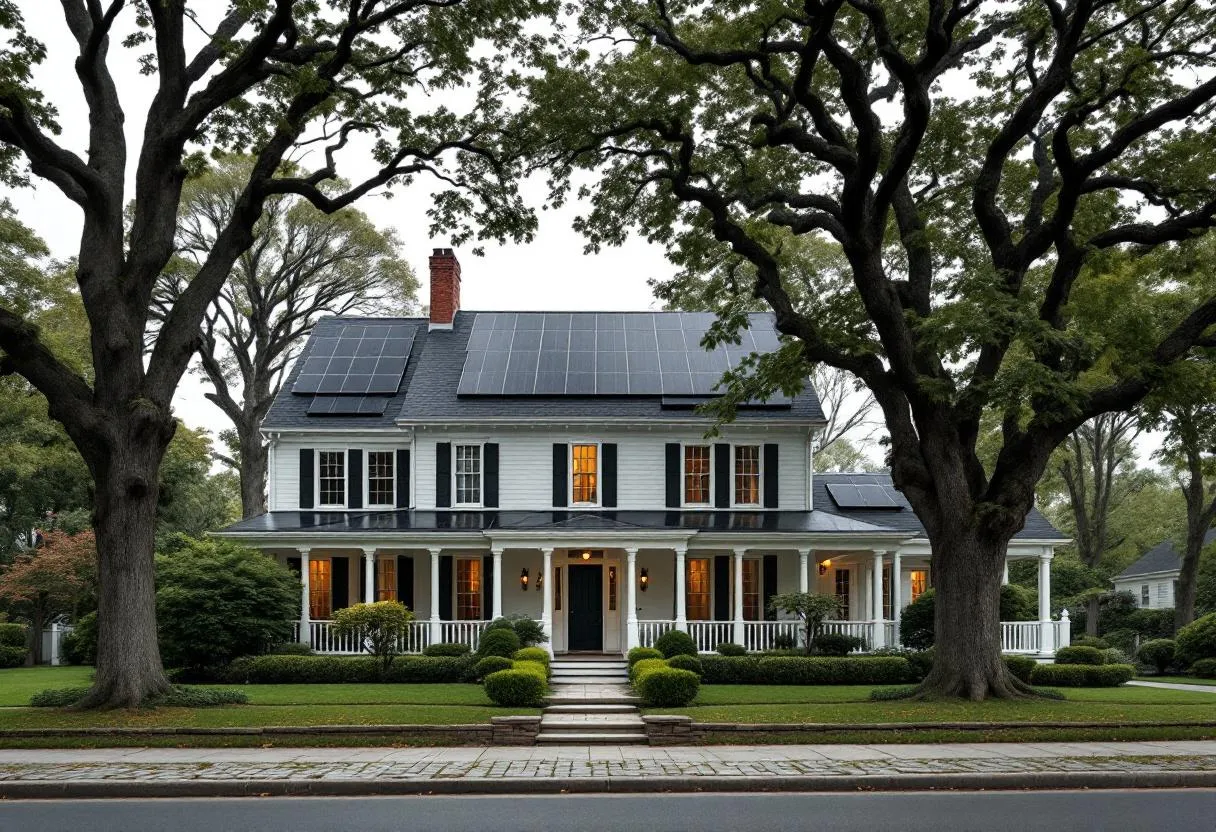
Why Massachusetts Is a Top Solar State
Massachusetts might not be the first state you think of for solar. It gets more snow than Arizona. It has more cloudy days than Nevada. But here is the surprise: MA is consistently ranked as a top solar state, often in the top 10 nationally for total solar capacity.
Why? Because the incentives are that good. The combination of the SMART program, 1:1 net metering, a full property tax exemption, and the federal incentives means Massachusetts homeowners can save tens of thousands of dollars going solar.
Boston averages about 4.2 to 4.5 peak sun hours per day. That is solid. And when you pair that with the state's generous programs, solar becomes a very strong financial decision — even in New England.
Let us break down every MA solar incentive available in 2026.
🔑 Key Takeaways for Massachusetts
Find Your State Savings
Use our free calculator to discover incentives in your ZIP code
SMART Program
Get paid a fixed rate for your solar production for 10 years.
1:1 Net Metering
Every kWh you export earns full retail credit on your bill.
7–10 Year Payback
Strong incentives make payback fast, even with less sun.
Why State Incentives Matter Now
With the 30% federal residential solar tax credit no longer available as of January 2026, your state and local incentives are now the biggest factor in your solar savings. Some states offer tax credits, others have rebate programs, SRECs, or net metering that pays you back every month. The difference between states can mean thousands of dollars — and that is exactly what Solar Incentive Finder helps you uncover. Enter your ZIP code to see what is available in your area →
The credit lets you deduct 30%. It is not a deduction — it is a real credit. Every dollar of the credit reduces your tax bill by a dollar.
If your system costs $30,000, you get $9,000 back. The credit is active through 2032, so you still have time. But starting sooner means more savings sooner.
The Federal Credit Has Ended — Here Is What Matters
How it works: Install panels in 2026, claim the credit on your 2026 tax return (filed in 2027). The credit covers the full installed cost — panels, labor, permits, batteries, and inverters.
- ✅ Valid through 2032
- ✅ 30% credit (30%)
−$8,400 Estimated SMART income (10 years) −$14,000 Sales tax exemption savings −$1,750 Net cost after all incentives ~$3,850 Estimated yearly electric bill savings ~$1,200–$1,800 Simple payback period ~3–7 years
These figures are illustrative. Your actual costs and savings depend on your roof, equipment, utility rate, and the SMART block available when you sign up. Get a custom quote for your home →
Frequently Asked Questions
Is solar worth it in Massachusetts?
Yes. Massachusetts is one of the top states for solar despite its climate because of strong incentives like the SMART program, 1:1 net metering, property tax exemption, sales tax exemption, and the federal incentives. Typical payback is 7 to 10 years.
What is the SMART program in Massachusetts?
The SMART (Solar Massachusetts Renewable Target) program pays homeowners a fixed rate for every kilowatt-hour of solar electricity they generate. These payments last 10 years and are on top of the credit you get from net metering.
Does Massachusetts have net metering?
Yes. Massachusetts requires utilities to offer 1:1 net metering for residential solar systems up to 10 MW. This means every kWh you send to the grid earns you a credit worth the same as the electricity you buy from the grid.
Are solar panels tax-free in Massachusetts?
Massachusetts has two major tax exemptions for solar. First, a 100% property tax exemption for 20 years means your added home value from solar cannot increase your property taxes. Second, there is a 6.25% sales tax exemption on solar installation equipment.
How much does solar cost in Massachusetts?
A typical residential solar system in Massachusetts costs $25,000 to $35,000 before incentives. After the 30% tax credit, net cost is about $17,500 to $24,500. Most homeowners see payback in 7 to 10 years.
Find Your Massachusetts Solar Savings
Enter your zip code to see your exact utility rebates and all incentives available for your MA home.
Enter Your Zip Code →