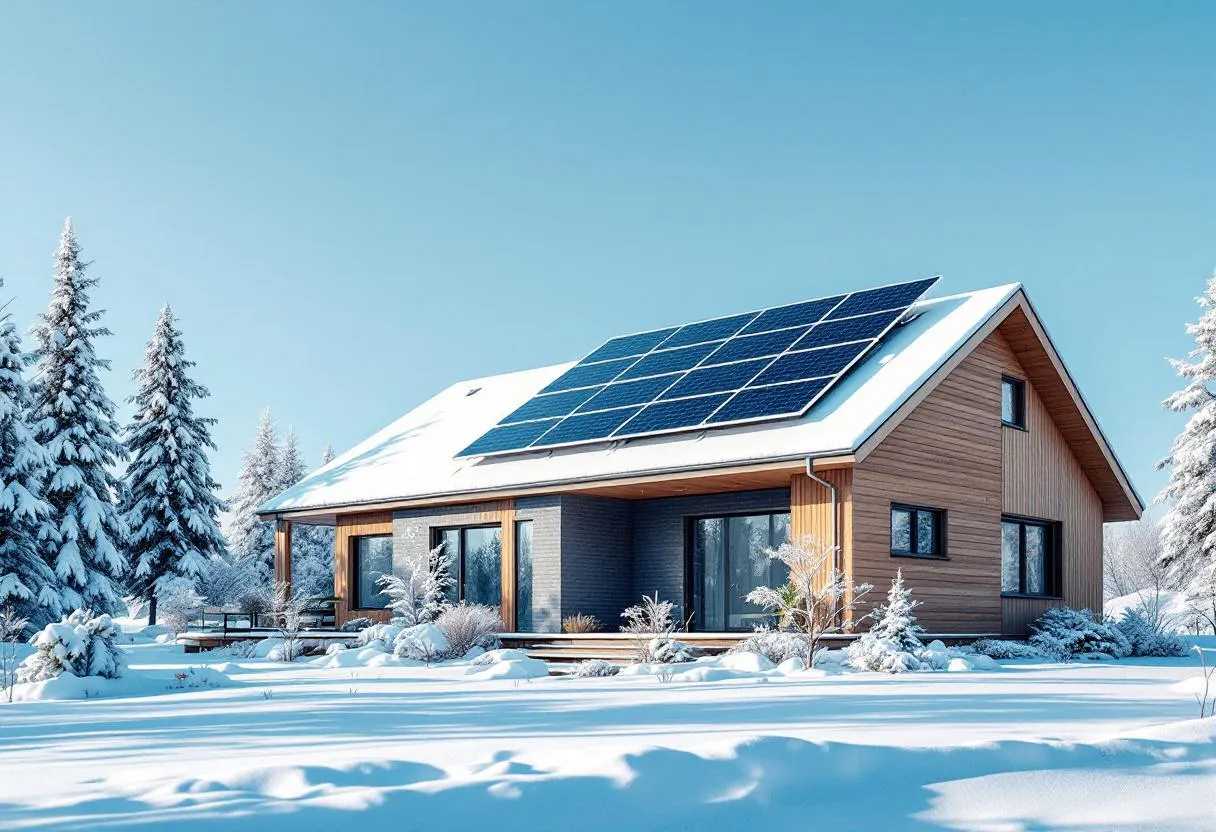
If you've ever thought "solar panels only work when it's hot out" — you're not alone. But here's the thing: that's a myth, and a common one.
The truth? Solar panels don't need heat. They need sunlight. And plenty of it still shines in winter — even when it's freezing. In fact, research shows solar panels are more efficient in cold temperatures.
In this guide, we'll bust the top 5 winter solar myths with real data from cold-weather states. Whether you're in Colorado, New York, Massachusetts, or anywhere with a real winter season, this guide will tell you exactly what to expect.
🔍 See how much solar could save you — even in winter.
Enter your zip code to find out what incentives, tax credits, and savings are available in your area.
Enter Your Zip Code →📋 What You'll Learn
🌡️ The Surprising Truth: Cold Actually Helps Solar Panels
Here's a fact that surprises most people: solar panels generate more electricity when it's cold.
Solar panels don't run on heat — they run on photons from sunlight. When sunlight hits the silicon cells in a panel, it knocks electrons loose and creates an electric current. And that process works better at moderate temperatures.
Why Cold Boosts Efficiency
Every solar panel has something called a temperature coefficient. This is a number that tells you how much efficiency is lost per degree above 77°F (25°C). For most panels, it's about -0.3% to -0.5% per °F above that baseline.
So when a rooftop panel hits 140°F on a hot July day — which they can — you could be losing 10% to 15% of your panel's rated power. In winter, when your panels stay closer to their optimal temperature, they deliver closer to their rated output.
☀️
Cold Day (32°F)
Panel efficiency near 100% of rated output
Cool temps = better electron flow
🔥
Hot Day (95°F+)
Panel efficiency drops 5–12% below rated
Heat increases internal resistance
Of course, winter has shorter days and lower sun angles, which means less total sunlight hitting your panels. But on a per-hour basis? Cold weather gives panels an edge.
🚫 Myth vs Fact: 5 Common Winter Solar Myths
Let's tackle the most common misconceptions about solar panels in winter — one by one.
❌ MYTH #1
"Solar panels don't work in the cold."
✅ FACT
Cold temperatures increase solar panel efficiency. The cells convert sunlight to electricity more efficiently at lower temperatures because electricity flows better through the silicon. States like Alaska and Maine have active solar industries.
❌ MYTH #2
"Snow will damage my panels."
✅ FACT
Solar panels are rigorously tested for snow loads — typically rated for 100+ lbs per square foot. Most panels survive decades of harsh winters with zero damage. The dark surface of the panel also absorbs sunlight and helps snow melt faster.
❌ MYTH #3
"Cloudy winter days = zero production."
✅ FACT
Solar panels generate electricity from any daylight, not just direct sun. On cloudy days, they typically produce 10% to 25% of their rated output. That's less than a sunny day — but it's absolutely not zero.
❌ MYTH #4
"I need to manually clear snow off my panels."
✅ FACT
In most cases, snow slides off on its own. The smooth, slippery surface of the panels combined with their tilt angle means snow naturally sheds. Light snow usually disappears within hours once the sun comes out.
❌ MYTH #5
"Solar in winter is a waste of money."
✅ FACT
Your annual energy production is what matters — not any single month. Thanks to net metering (explained below), your surplus summer production covers your winter shortfalls. Over 12 months, solar saves money in all 50 states.
🌨️ How Snow Affects Your Panels
Yes, you read that right — the panels above the heading. Snow does impact production temporarily. Let's look at how.
Angle Matters
Most rooftop solar installations have a tilt of 15° to 45°. The steeper the angle, the faster snow slides off. Most installers optimize panel angles for your latitude, which naturally helps with snow removal.
Production Loss from Snow Cover
According to research from The National Renewable Energy Laboratory (NREL), snow typically causes an average annual production loss of 2% to 7% in snowy regions. That's far less than most people expect.
| Snow Scenario | Estimated Loss | Duration |
|---|---|---|
| Light dusting (< 1") | 0–2% | Hours |
| Moderate snow (1–5") | 5–15% | 1–2 days |
| Heavy snowfall (5"+) on flat panels | 20–40% | 2–5 days |
| Annual impact (snowy climate) | 2–7% | Accumulated |
💡 Pro Tip: Snow doesn't actually harm solar production as badly as you might think. Fresh snow on the ground around your panels can actually increase output by reflecting additional light onto the bottom edge of the panels — this effect is called the "albedo effect."
📊 Winter Production by State
Cold states still generate impressive amounts of solar energy. Here's a look at three states known for real winters:
| State | Winter Solar Output | Key Reason |
|---|---|---|
| 🏔️ Colorado | 30–40% of summer output | 300+ sunny days per year, high altitude boosts UV exposure |
| 🗽 New York | 25–35% of summer output | Strong state incentives and net metering offset winter dips |
| 🎓 Massachusetts | 25–35% of summer output | Top 10 state for solar despite cold winters and heavy snowfall |
Why These States Still Win
- ☀️High altitude means less atmosphere to block sunlight — Colorado's "Mile High" advantage means stronger UV rays even in December.
- 🔄Net metering programs let you bank summer surplus credits to use in winter.
- 💰State incentives in NY and MA (like SREC programs) add extra value that more than offsets any winter production loss.
- 📐Higher sun angles than you might think — even in December, the midday sun is strong enough to produce meaningful energy.
⚡ Tips to Maximize Winter Production
Want to squeeze every last kilowatt-hour out of your panels during winter? Here are 5 practical tips.
1. Optimize Panel Tilt
In winter, the sun is lower in the sky. If you have adjustable mounts, increasing your tilt by 10° to 15° above summer settings can improve winter capture significantly.
2. Keep Panels Clean
After a heavy snowstorm, use a soft roof broom or solar panel snow rake to gently clear heavy accumulations. Never use hot water or pressure washers — the thermal shock can crack the glass.
3. Monitor Your Output
Use your panel monitoring app to track production. If you see a sudden drop to zero that doesn't recover after snow melts, it could indicate a wiring issue. Consistent low production means it's worth a professional check.
4. Trim Nearby Trees
In winter, trees are bare and the sun's path is lower. Branches that seemed fine in summer may cast long shadows across your panels. Trim them back before the first frost.
5. Consider Battery Storage
While not essential, a home battery system lets you store daytime solar production for use during the long winter evenings. It's especially useful if you live in an area with frequent winter power outages.
🔄 Net Metering Saves You in Winter
Here's the most important thing to understand about solar in winter:
Winter production isn't the whole story.
Most solar homeowners don't just look at winter — they look at the full year. Here's why that works:
How Net Metering Works
When your panels produce more electricity than you use (which happens most summer days), that extra energy goes back into the utility grid. Your utility credits your account for every kilowatt-hour you send.
Then, in winter, when your panels produce less but you use more (for heating and lighting), you draw down those credits. Think of it as a seasonal savings account — deposit in summer, withdraw in winter.
The Annual Solar Balance
☀️ Summer
Produce MORE than you use
→ Credits roll over to your account
❄️ Winter
Use MORE than you produce
→ Use your summer credits
Over a full year, most households offset 80% to 100% of their electricity costs with solar.
📌 Check Your State's Policy
Net metering rules vary widely by state. Some states offer full retail net metering, while others have time-of-use rates. Look up your state's incentives → to see how your solar investment pays off year-round.
❓ Frequently Asked Questions
Do solar panels work in cold weather?
Yes — and actually better than in hot weather! Solar panels convert sunlight to electricity more efficiently at lower temperatures due to improved electrical conductivity within the silicon cells. The key factor is sunlight intensity, not temperature. States like Colorado, New York, and Massachusetts all generate substantial solar energy throughout winter.
Does snow ruin solar panels?
No. Solar panels are built to handle harsh conditions. They're tested to withstand snow loads of 100+ pounds per square foot and extreme temperature swings. In fact, the dark surface of the panels absorbs heat from the sun, which helps snow melt and slide off naturally. Most residential panels carry 25-year warranties that cover weather-related damage.
How much less energy do solar panels produce in winter?
Solar panels typically produce 25% to 50% of their summer output in winter months, depending on your location and snowfall. The primary reason isn't cold — it's shorter daylight hours and lower sun angles. However, thanks to net metering, your surplus summer production helps make up for it. Over the full year, the system still pays for itself.
Should I remove snow from my solar panels?
Usually, no action is needed. Snow naturally melts and slides off due to the panel's dark surface and tilt angle. If you have heavy, persistent snow cover and need maximum production, use a soft solar panel brush or roof snow rake. Avoid using shovels, hot water, or pressure washers — these can damage the panel surface or create dangerous thermal shock.
Do I need batteries for winter solar production?
Not necessarily. If you have net metering available in your state, surplus summer energy credits your account to cover winter shortfalls. Batteries are mainly useful as backup power during outages or in areas without net metering. Battery costs have dropped significantly, and many homeowners add them after their solar system is already running.
🌟 Ready to See What Solar Can Do for You?
Even in the colhest, snowiest states, solar is a smart investment. Find your local incentives, tax credits, and estimated savings — in under a minute.
Find Your Solar Incentives →